
|
Date: February 20 - April 3, 2003. Program Name: Environmental Studies of Thailand Courses: (1) Environmental Science, Ethics and Public Policy of Thailand; (2) Natural History of Thailand Course Rendezvous: Bangkok, Thailand. Course Dropoff: Bangkok, Thailand. Disciplines: Environmental Studies, Environmental Sciences, Geography, Geology, Biology, Cultural Anthropology. Faculty Names: David Scott Silverberg, Ph.D.,, numerous guest educators and local area experts. Course Fee: $3950 (partial scholarship available) |
||
|
|
|
|
|||
|
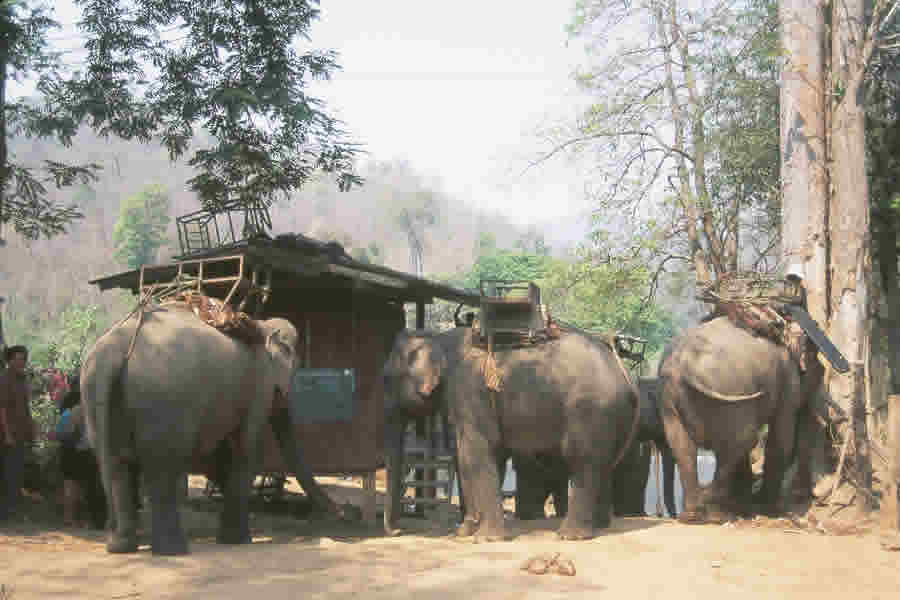
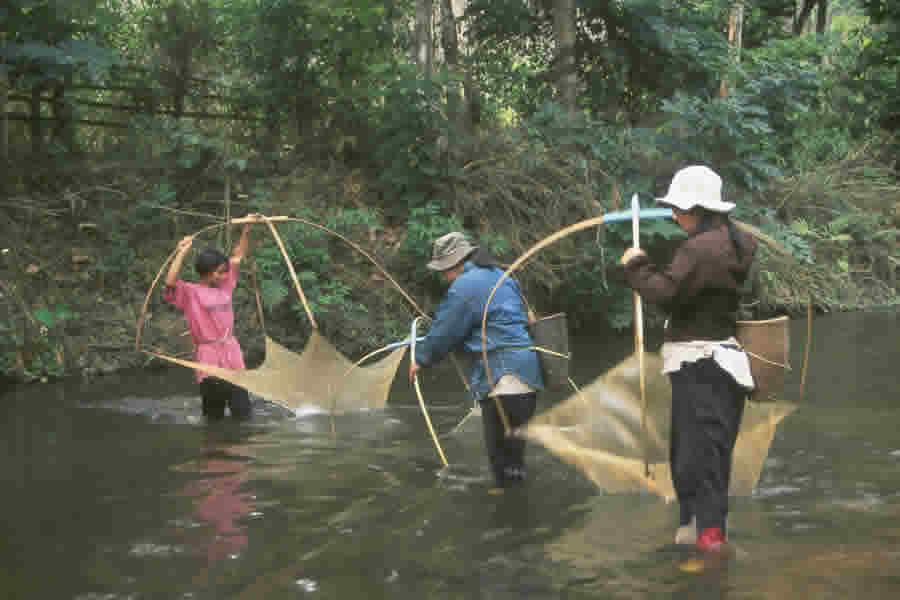
COURSE DESCRIPTION Our expedition explores and studies Thailand from its spectaular southern rainforest/coral reef peninsula to its northern dipterocarp dry forest mountains. Southeast Asia is one of the world's greatest centers of biological and cultural diversity. Our 6 week course spends 2 weeks in each of three remarkable areas allowing a thorough exploration of distinct globally threatened tropical ecosystems and their human communities. We have much to learn with and from the Thai people. We take a case study approach exploring a cutting edge environmental issue in depth in each area. These issues can change significantly from year to year. In southern peninsular Thailand we will study in Khao Sok National Park. This limestone kharst topography is cloaked in primary rainforest and is home to the endangered clouded leopard, great hornbills, Asian elephant, Barking deer and Long-tail macaque. This is one of many protected areas in the peninsula, however there is enourmous pressure to convert land for agriculture, timber and energy production. If conditions allow, we spend a few days conducting snorkel inquiry-based activities in the nearby Andaman Sea. While travelling to northern Thailand we will visit and study at the Thai Elephant Conservation Center in north-central Thailand. There we will have an excellent opportunity to learn about the Asia elephant and the human communities whose lives are so closely intertwined with it. From there we head north for a briefing in Chaing Mai before heading out into the deciduous dipterocarp forests of the Hill Tribes region. Here, while studying the geology and flora and fauna, we will learn about the different environmental practices of the many cultures of the region. By experiencing both relatively pristine and modified cultural landscapes in the coral reefs, rain forests and dry dirpterocarp-monsoon forests, we'll develop a framework for considering opportunities and challenges for the Thai and the broader SE Asia community. Case Studies: (1) Khao Sok National Park. How does the designation of protected areas in Peninsular Thailand further the goal of preserving biological diversity while securing economic livelihood for the region and nation? (2) Thailand Elephant Conservation Center. What are the opportunites and challenges for southeast Asian threatened and endangered species given the rapidly changing land cover and economy? (3) Chiang Mai and Hill Tribe Region. How will the traditional cultures,
agricultures, and economies of the Hill Tribe peoples remain successful
and environmentally sustainable, and will they be considered a viable
alternative to the development modes championed by the industrial West? Course Size: 12 student maximum. Evaluation: Assessment tools include quiz, exam, field exercises, journal, seminar participation. COURSE OBJECTIVESUpon completion of these two courses, a student should be able to: Natural History of Thailand 1. identify the ecological zones of Thailand. 2. describe the principal physical geographic and geologic features of Thailand and the Greater Southeast Asia Region. 3. apply principles of field biology to identify common flora and fauna. 4. describe the legal status of Thailand's protected areas, different categories of protected areas and its effects on people and biological diversity. Environmental Science, Ethics and Public Policy of Thailand 1. describe the cultural assets of Thailand 2. describe the impacts of sprawl, farming, siliviculture, dams, mining, petroleum resource development and tourism on Thailand. 3. define an environmental issue and informed by a specific environmental ethic, propose a method for problem solving that is consistent with sustainable development 4. understand the role of the residential, business, government, NGO, military, education, religious sectors in designing, implimenting and managing Thai environmental policy Begin introductory studies in the Thai language. |
||||
|
LECTURE/EXERCISES/FIELD EXERCISE TOPICS Environmental Science, Ethics and Public Policy of Thailand 1 Environment & environmentalism in Thailand Natural History of Thailand 1 Intro to Southeast Asia Bioregion
|
||||
|
READING LIST A reader will be given to each student upon arrival. The reader is composed in part of the following articles and texts: Boyes, J. (1992). A Life Apart: Viewed form the Hills. Bangkok, Silkworm
Books. |
||||
|
REQUIRED PERSONAL CLOTHING & PERSONAL EQUIPMENT Hiking Boots Tivas or other sandles Gaiters (to keep the leeches out of your pants/boots/socks Socks (wool or capilene blend), lite weight, 3pairs Liner socks, 3pairs Underwear, lite-weight capilene or poly, 3 pair Underwear, cotton 2 pair (for town) Pants, durable lite-canvas, 2 pair (e.g. carrharts) shorts Pants, cotton (for town) cotton long sleeve shirts, 2 cotton t-shirt rain hat rain poncho umbrella (can be purchased in Thailand inexpensively $5) baseball cap or other sunshade hat bandana Backpack Day Pack lite-weight Sleeping Bag Thermarest Sleeping Pad Flashlight (headlamp for nite light and reading), bring extra batteries Swiss Army Knife or Leatherman Tool Personal First Aid Kit Personal medications Personal Toiletries Personal Quick-dry Towel Sunglasses with retainers Sunscreen Lip Block Pen, pencils, personal journal Field Glasses/Binoculars Compass |
||||
A WORD ABOUT EXPEDITIONARY LEARNINGAn expedition is an intentional short-term team-based exploration in which all participants work towards accomplishing a mutually agreed upon mission. Expeditions typically take place in environments that are new to the team participants. The mission of our Thailand program is to learn, through a rigorous academically-oriented immersion, about the Thailand ecosystems and the communities whose lives are within these ecosystems. Members of an expedition team must have specific attributes to achieve success: flexibility, adaptability, patience, developing a culture of safety, good listening skills, good communication, acknowledging, respecting and utilizing differences, build on one another’s strengths, collaboration, trust, respecting one another’s physical and emotional space, a sense of humor. |
||||
|
FEES, TRAVEL, MEDICAL INSURANCE Cost: A comprehensive fee of $3950. The Environmental Learning Institute provides course transport from the Bangkok rendezvous, on-course travel, food, cooking equipment, tents, lodging, protected area fees, course reader and all scientific and research equipment. This fee does not include airfare from the student’s home to and from Bangkok, personal clothing, personal equipment expenses, personal expenses or optional travel. Participants must have medical coverage that is active in Thailand. Travel Arrangements: STA Travel, Tucson specializes in Student Tickets, Consolidator rates and International discounts for students. Veronica Duncan,
Travel Advisor STA Travel The expedition will meet at the Shanti Lodge in Bangkok on Thursday, February 20, 2003 at 1800 hours (6 PM). Airport arrivals are encouraged to take a taxi from the airport to Shanti Lodge. A map and lodge info will be sent to you upon acceptance. Please submit your Application form and Reference form ASAP. You will be notified of acceptance within a few weeks. A non-refundable deposit of $300 is due no later than 10 days following acceptance in order to reserve a place in the course. Once accepted, your Medical Form, Informed Consent Form, Financial Aid Form, copy of health insurance card, and copy of the information page of the applicant's passport are required 6 weeks prior to the start date. Full tuition is due 6 weeks prior to the start date. You may pay deposits and full course fees by credit card using PayPal. (www.paypal.com) For more information
and applications, please contact: Environmental Learning
Institute |
||||